

Budgeting basics
Before applying inflation-proof budgeting tips, you need a clear snapshot of your current cash flow. You cannot stretch a dollar if you do not know where it is going. Start by gathering your last three months of bank statements and credit card bills to identify your average monthly spend across fixed costs—like rent and insurance—and variable costs, such as groceries and entertainment.
To gain full control, move toward a zero-based budget. This method requires you to give every single dollar an assignment before the month begins, ensuring that income minus expenses equals zero. If you have $4,000 coming in, every cent is allocated to a category, whether that is a utility bill, a high-yield savings account, or a specific grocery limit.
Once you have this baseline, you can identify which categories are most susceptible to price volatility. This allows you to prioritize essential spending and cut non-essential leaks before the economic pressure increases.
Follow the process
Inflation-proof budgeting requires a shift from passive tracking to active allocation. Instead of reviewing what you spent at the end of the month, you must dictate where your money goes before it leaves your account. This prevents "budget creep," where rising costs of staples slowly eat into your savings.

Review the last 90 days of bank statements. Categorize expenses into fixed costs (rent, insurance) and variable costs (groceries, dining). Identify which variable categories have seen the steepest price increases to prioritize where you need to cut.
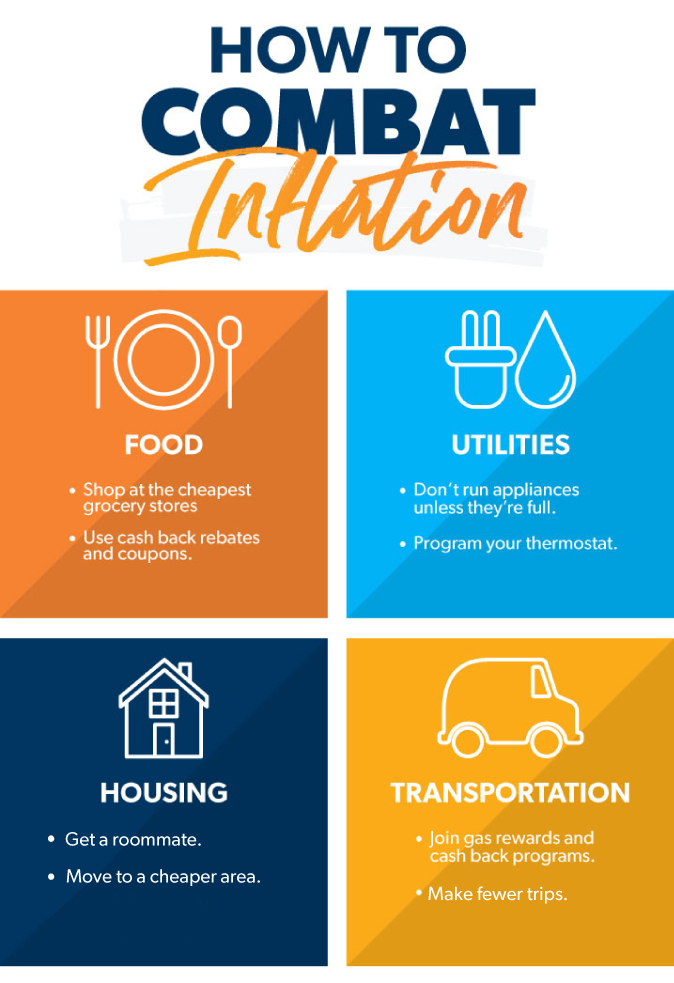
Assign every single dollar a specific purpose before the month begins. If your income is $4,000, your expenses, savings, and debt payments must equal exactly $4,000. This ensures no money is lost to mindless spending during periods of economic volatility.
Secure your basic necessities first: food, utilities, shelter, and transportation. When inflation spikes, these non-negotiables take precedence over subscriptions, hobbies, or luxury upgrades to ensure stability.
Set aside a small "inflation fund" within your monthly budget. This is a separate line item—even if only $50—designed to absorb unexpected price jumps in gas or electricity without forcing you to dip into your primary emergency savings.
Avoid these mistakes
Many people attempt to fight rising costs by simply cutting spending without a plan. This often leads to "budget fatigue," where strict restrictions cause a cycle of deprivation and subsequent overspending. When you don't assign a specific purpose to every dollar, it is easy to overlook small, recurring leaks that compound during periods of high inflation.
Another common error is relying on static budgets. A budget set in January rarely survives the price fluctuations of 2026. If you don't adjust your categories monthly based on actual spending, you end up chasing a number that no longer reflects the cost of groceries or utilities, making your inflation-proof budgeting tips ineffective.
Finally, avoid the trap of ignoring "lifestyle creep" in the name of convenience. During economic uncertainty, the cost of convenience services—like delivery apps or pre-cut produce—rises faster than base goods. Failing to distinguish between a necessity and a convenience can drain your reserves faster than inflation alone.
No comments yet. Be the first to share your thoughts!